Open Source License Crisis: The 2026 Sustainability Impact of MinIO, Redis, and HashiCorp
Three major projects changed their open source models. Your dependencies are likely next. Here is what the September 2026 compliance deadline implies for your infrastructure.
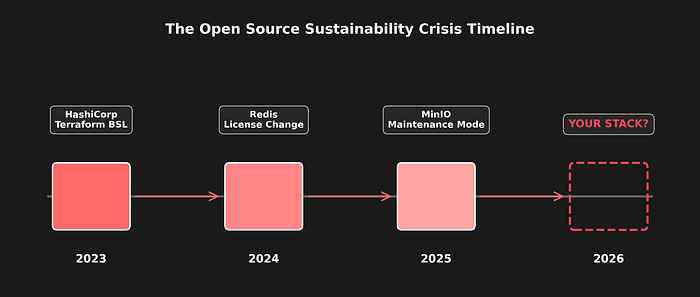
In November 2025, MinIO quietly entered maintenance mode. No new features, no community contributions. The message was clear: Migrate to MinIO Enterprise or find alternatives.
This wasn't an isolated incident. It is the latest example of a pattern accelerating since 2023. If you are running infrastructure in 2026, this crisis is reaching your stack whether you are ready or not.
From Open Source Hero to Commercial Only
Let's look at the timeline. In 2023, HashiCorp changed Terraform from the Mozilla Public License to the Business Source License (BSL), effectively ending its status as open source. Although the community forked it into OpenTofu, the damage was done.
In 2024, Redis changed its license to SSPL. And in 2025, MinIO followed suit.
This isn't a coincidence. It is a business model, and it is working for them.
The Economics Driving This Model
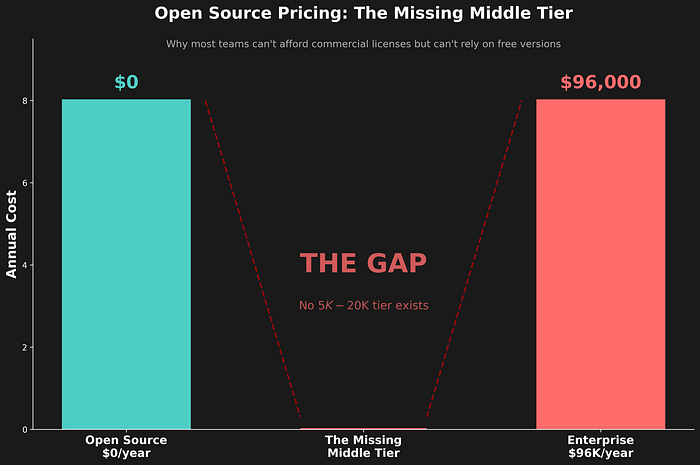
The scenario is simple: You build an excellent open source tool. DevOps teams adopt it because it is free and works well. Your user base grows. But 95% of users never pay. The remaining 5%—large enterprises—pay if it fits their budget.
However, a $96,000 enterprise license doesn't make sense for a startup spending $5,000 monthly on AWS. Vendors avoid offering a mid-tier $10,000 plan to prevent cannibalizing enterprise deals. The result: You either choose free-with-no-support or unaffordable-enterprise.
What Happens When Dependencies Hit Maintenance Mode?
The technical risk is obvious: Security patches stop. But in 2026, a new risk emerges: Compliance.
The EU Cyber Resilience Act (CRA), taking effect in September 2026, requires manufacturers to report vulnerabilities within 24 hours. If you rely on software in maintenance mode, you depend on a vendor offering "case-by-case" fixes. You are facing not just technical debt, but regulatory penalties.
Audit Your Stack Now
Open your package.json or go.mod. If you use Kubernetes, you rely on CNCF projects like etcd, which are relatively safe due to multi-vendor support. But beware of single-vendor projects.
Projects governed by true foundations (Apache, CNCF, Linux Foundation) are significantly more resilient. Check the governance models of tools like Docker and Jenkins. While managed services like EKS offer some protection, the underlying license matters.
The 2026 Reality: Budget For This Now
- Audit: Check every dependency for single-vendor control.
- Calculate Costs: Estimate migration costs or commercial license fees now.
- Prioritize Foundations: Choose foundation-governed projects, even if they are slightly technically inferior at the moment.
Open source isn't dying, but the old model of "free forever via volunteers" is changing. To survive in 2026, your strategy must adapt.